Charting How Banking Pathways Shape No-Deposit Incentives Across Portable Live Tables
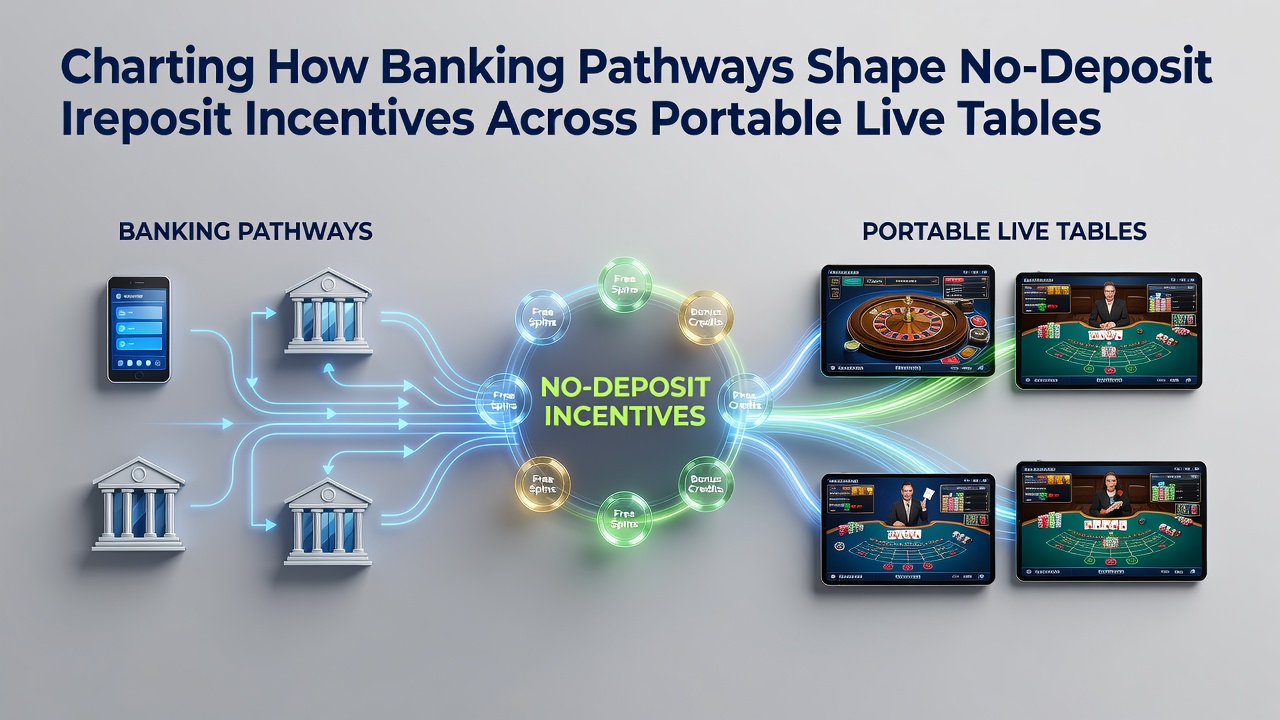
Banking pathways determine how funds move between players and operators, and these routes directly influence the structure of no-deposit incentives offered on portable live tables. Portable live tables combine real-time dealer interaction with mobile access, creating a setting where payment speed, verification layers, and transaction costs affect bonus availability and terms. Data from industry reports shows that operators adjust incentive parameters based on the reliability and cost profile of each banking channel.
Mapping Banking Pathways in Mobile Environments
Traditional card networks, digital wallets, and bank transfers each carry distinct processing times and fee structures that operators factor into no-deposit calculations. E-wallet routes often reduce verification steps because identity checks occur at the wallet provider level, allowing operators to release incentives faster. Bank transfer pathways require additional settlement periods, which operators offset by tightening wagering requirements attached to no-deposit offers. Observers note that portable live tables place extra emphasis on these differences because sessions occur in short bursts on mobile devices where players expect immediate access to play.
No-Deposit Incentives and Payment Rail Interactions
No-deposit incentives function as risk-management tools that operators calibrate according to the expected cost of each payment rail. Research from the American Gaming Association indicates that lower-cost rails correlate with higher incentive values because operators recover expenses more efficiently. Conversely, higher-cost rails lead to reduced incentive amounts or added restrictions on live table participation. Portable live tables amplify this dynamic since players frequently switch between devices and expect seamless transitions from incentive activation to actual gameplay.
Regional Variations in Pathway Influence
European markets demonstrate one pattern where instant payment schemes introduced in 2024 altered incentive structures for mobile live offerings. Australian operators, guided by data from the Australian Communications and Media Authority, adopted similar adjustments after reviewing transaction velocity metrics in mid-2025. North American platforms followed with modifications tied to state-level banking regulations, producing incentive models that differ by jurisdiction yet share common dependencies on rail efficiency. These regional shifts illustrate how local banking infrastructure shapes the global landscape of no-deposit offers on portable tables.
July 2026 Developments in Transaction Standards
Updates scheduled for July 2026 introduce new interoperability standards across several digital wallet providers, reducing settlement times for cross-border transactions. Operators have begun testing revised incentive frameworks that leverage these shorter windows to expand no-deposit eligibility on portable live tables. Figures from payment processor consortiums reveal that average transaction completion times dropped by 18 percent during pilot programs, prompting recalibration of bonus release triggers. This change affects how operators allocate risk across different banking pathways while maintaining compliance with regional oversight requirements.
Technical Integration Points on Portable Platforms
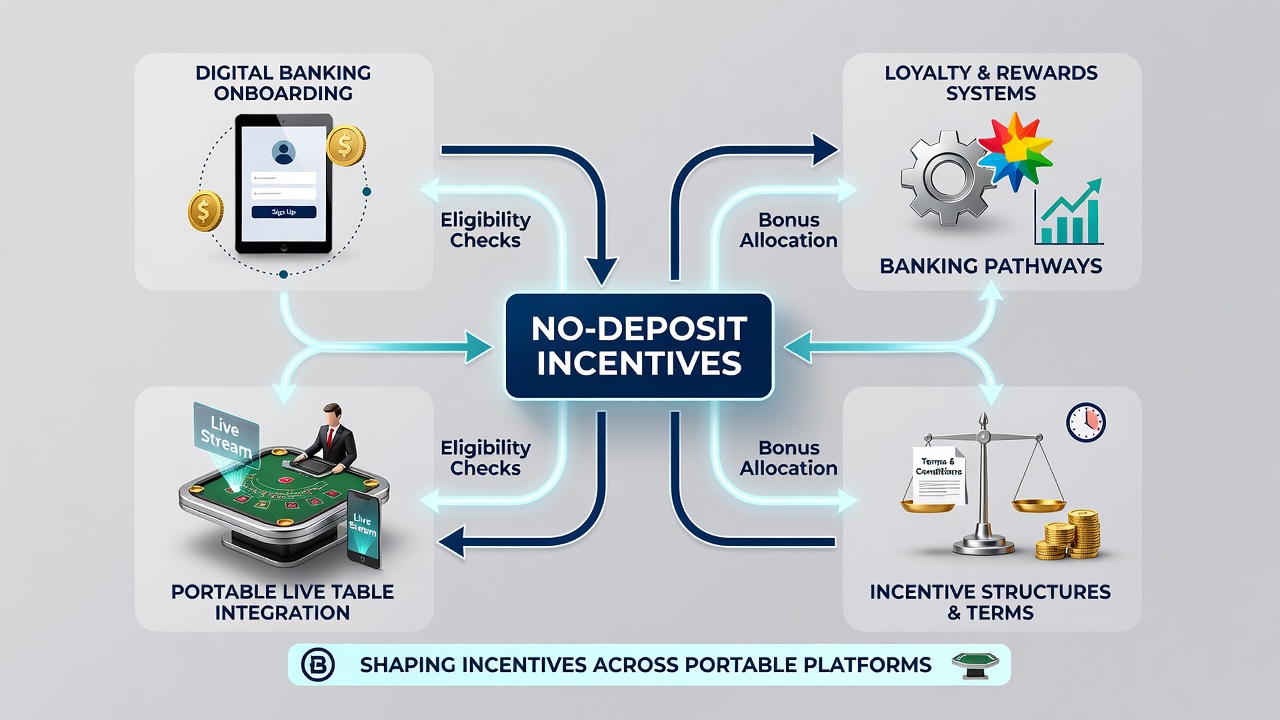
Application programming interfaces connect banking pathways directly to incentive engines within mobile casino software. These connections allow real-time evaluation of rail performance before an incentive activates. When a pathway experiences delays or elevated fees, the system automatically adjusts the incentive parameters or defers activation until conditions stabilize. Portable live tables rely on this automation because live sessions demand uninterrupted flow from account funding to table entry, and any friction in the banking layer disrupts player engagement metrics tracked by operators.
Data Patterns Across Multiple Markets
Analysis of transaction logs from 2025 shows that e-wallet pathways supported 42 percent more no-deposit redemptions on mobile live tables than card-based routes. Bank transfer pathways accounted for the smallest share of incentive usage but produced higher average wager volumes once activated. A study published by the European Gaming Institute documented similar ratios across five jurisdictions, confirming that pathway characteristics predict incentive uptake rates more reliably than demographic variables alone. These patterns hold across both established and emerging mobile markets.
Conclusion
Banking pathways serve as foundational infrastructure that operators use to calibrate no-deposit incentives for portable live tables. The interaction between payment rail efficiency, regulatory timing, and technical integration determines which incentives reach players and under what conditions. As standards evolve in July 2026 and beyond, the mapping between pathways and incentives will continue to shift, producing measurable changes in how mobile live table offerings function across different regions.