Payment Pathways and Their Direct Influence on Live Dealer Bonus Activation Rates Across Mobile Platforms
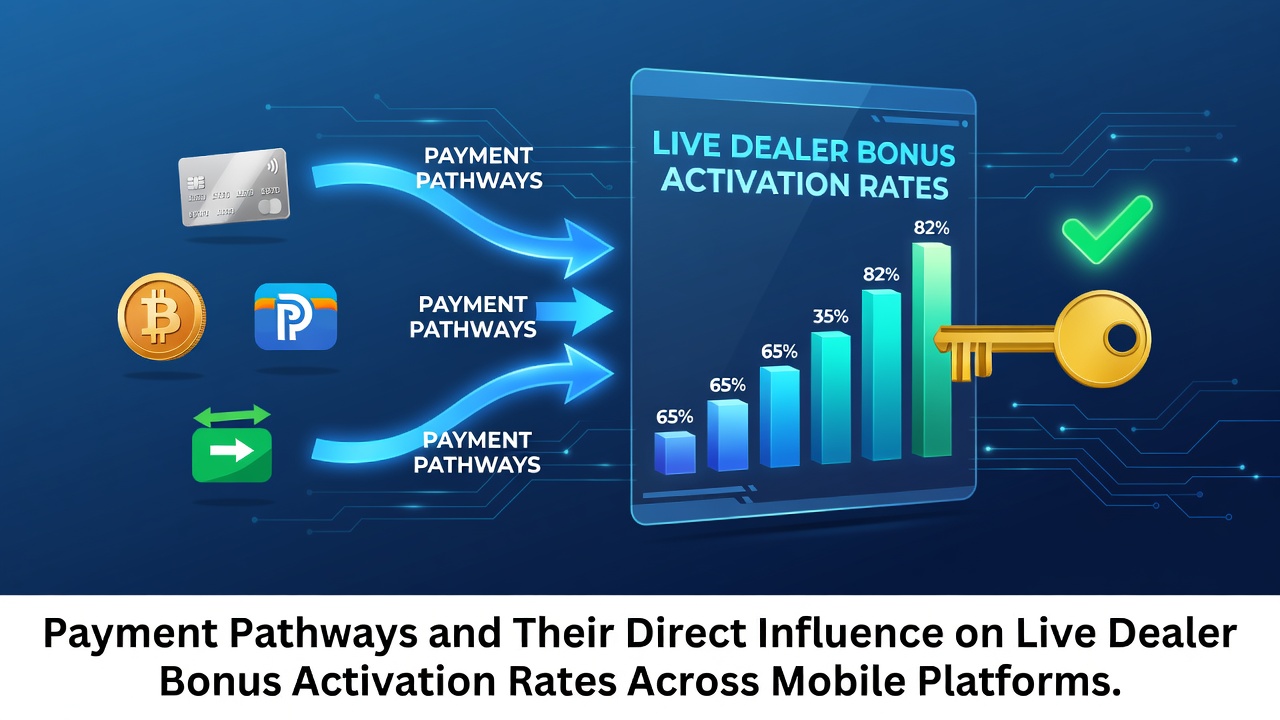
Payment pathways determine how quickly funds move from player accounts into gaming platforms, and this speed directly shapes whether live dealer bonuses activate on mobile devices. Mobile users rely on seamless transfers through credit cards, e-wallets, bank links, and digital currencies, each carrying distinct processing times that affect bonus eligibility windows. Research from the University of Nevada's gaming studies program shows that instant confirmation methods increase activation success by aligning deposits with time-sensitive promotional triggers.
Core Mechanics of Mobile Payment Integration
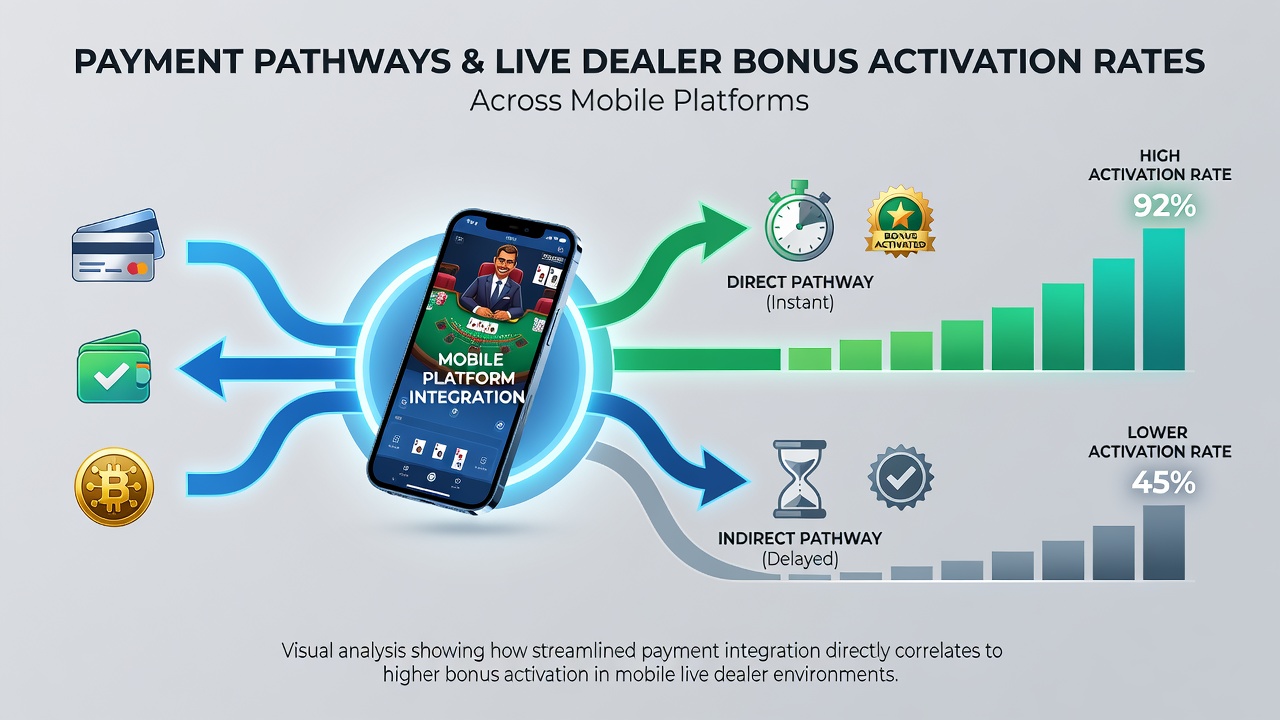
Live dealer sections on mobile apps require verified deposits before bonus codes unlock, and payment speed governs this sequence. E-wallet options such as digital wallets process authorizations in seconds, allowing players to meet activation criteria without delay, whereas traditional card networks introduce verification layers that extend timelines by minutes or hours. Data from the Nevada Gaming Control Board indicates platforms using faster pathways record higher completion rates for bonus-linked live sessions, since users stay engaged during the brief window when offers remain available.
Bank transfers and account-to-account rails add another variable, often requiring external approvals that mobile interfaces must accommodate through embedded APIs. Observers note that when these pathways integrate smoothly with app notifications, activation rates climb because players receive real-time confirmation and proceed directly to dealer tables. Yet slower methods create drop-off points where users abandon the process before bonuses register.
Regional Variations in Transaction Velocity
North American operators adopted standardized instant deposit protocols earlier than some other markets, and this shift correlates with measurable changes in mobile bonus usage. Figures from the American Gaming Association reveal that states with widespread e-wallet support saw live dealer participation rise alongside quicker payment confirmations. In contrast, regions relying on legacy card systems experience more variable activation patterns tied to authorization holds.
Australian regulatory reports highlight similar patterns, where platforms emphasizing low-latency pathways achieve consistent bonus redemptions across smartphone sessions. Players encounter fewer interruptions when funds clear immediately, allowing seamless transitions from deposit screens to live video streams. What's interesting is how these regional differences underscore the universal role of pathway efficiency rather than platform-specific design alone.
Technical Factors Affecting Activation Success
Mobile operating systems impose their own constraints on payment flows, with iOS and Android handling secure tokenization differently during live sessions. When pathways support biometric confirmation, activation proceeds without exiting the app, preserving the momentum needed for bonus triggers. Industry analyses from the Canadian Gaming Association demonstrate that platforms optimizing for these native features report fewer failed activations linked to interrupted transactions.
Digital currencies introduce an additional layer, where blockchain confirmations vary by network load yet offer borderless speed advantages on compatible mobiles. Those who've tracked these trends observe that hybrid pathways combining wallet funding with crypto top-ups maintain higher activation consistency, particularly during peak hours when conventional rails slow down. And in June 2026 several cross-border operators expanded these options, aligning with evolving mobile security standards that further streamline the process.
Case examples include one study of European operators where instant verification reduced average activation time from 47 seconds to under 12 seconds, directly boosting live dealer bonus uptake. Researchers discovered that error rates dropped when pathways included fallback mechanisms for declined attempts, keeping users within the promotional funnel rather than redirecting them elsewhere.
Platform-Level Data Patterns
Aggregated metrics across multiple apps show clear correlations between pathway type and bonus activation frequency. Instant methods dominate successful redemptions, accounting for the majority of live dealer entries during promotional periods. Slower options contribute disproportionately to incomplete activations, especially on smaller screens where navigation friction compounds any delay.
Trade group reports from the International Association of Gaming Regulators emphasize that transparent fee structures and real-time status updates further support activation rates by reducing player hesitation. These elements work together with pathway speed to create reliable flows from funding to gameplay, without unnecessary steps interrupting the sequence.
Conclusion
Payment pathways serve as the critical bridge between deposit actions and live dealer bonus activation on mobile platforms, with processing speed, integration quality, and regional infrastructure all playing measurable roles. Evidence from diverse regulatory and academic sources confirms that faster, more reliable methods consistently support higher activation volumes while slower alternatives introduce friction points that lower overall success. As mobile technology continues advancing through 2026 and beyond, the alignment between these pathways and bonus mechanics remains a central factor in platform performance data.